
SELECTED WORK
Two businesses. Neither site could belong to anyone else.
Both started the same way — time on site, before anything was designed. What follows is what I found, what it changed, and what got built.
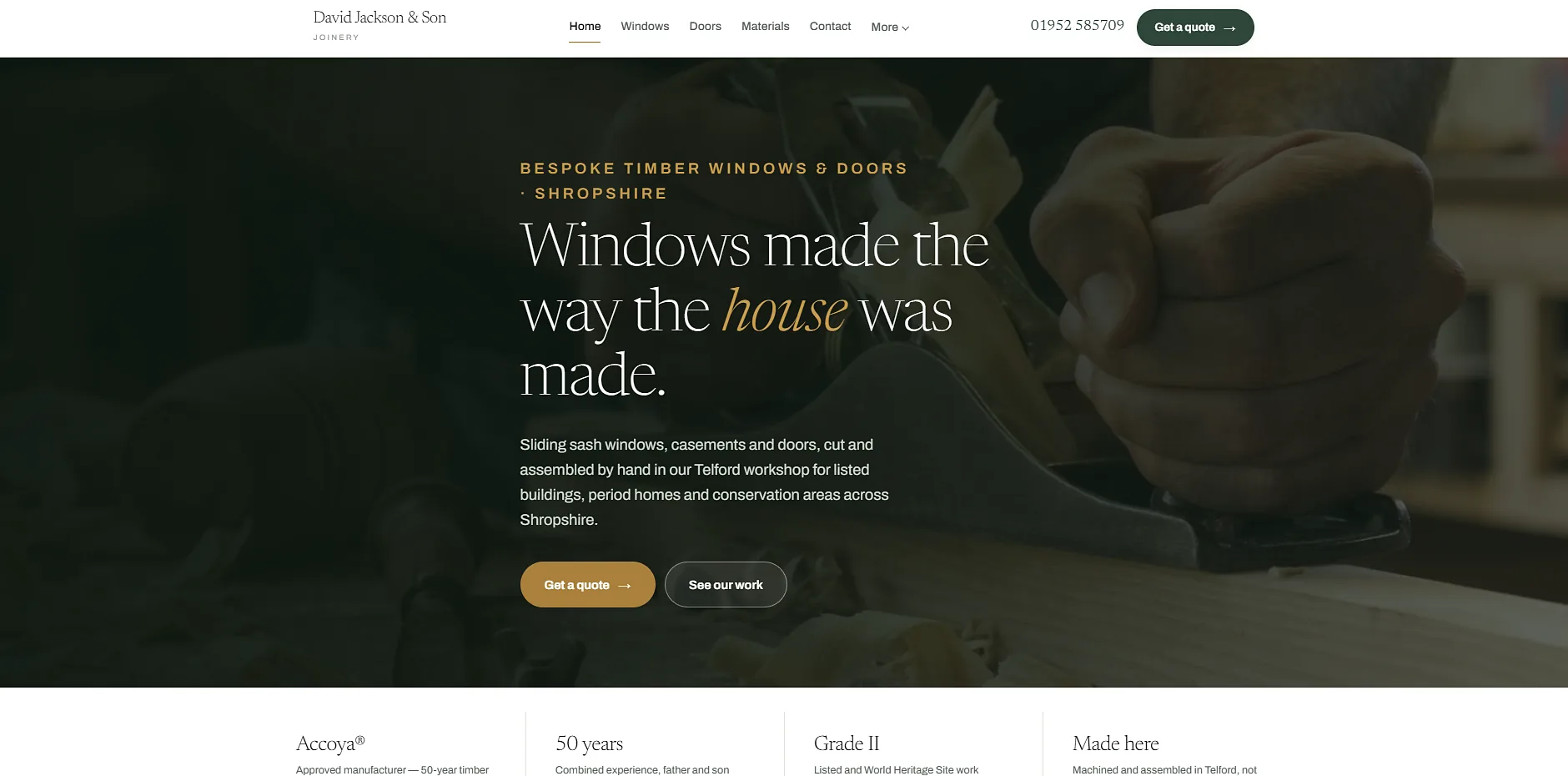
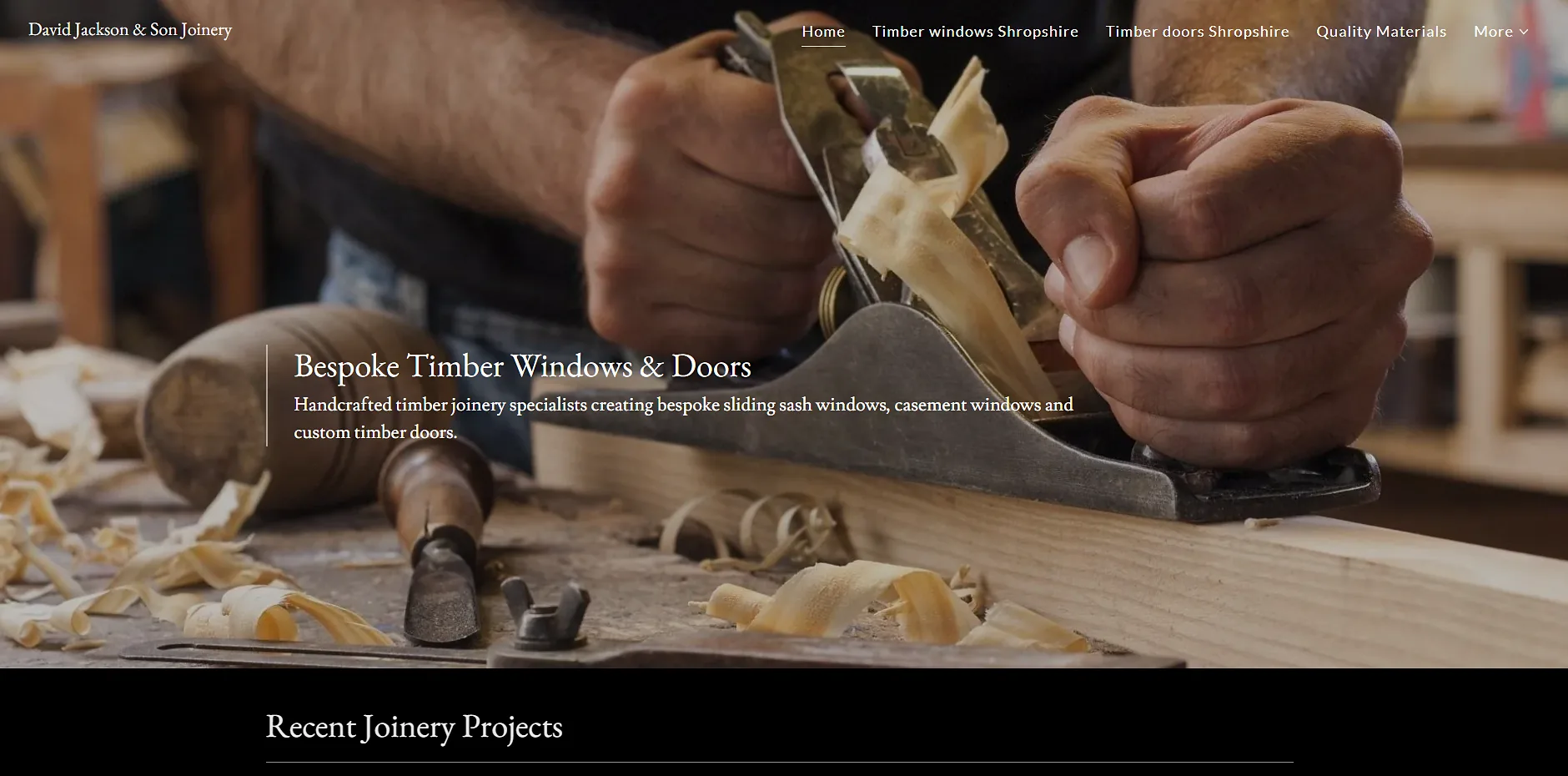
DAVID JACKSON & SON◆BEFORE / AFTER◆DRAG THE HANDLE
What I found
Harry’s workshop is not a joinery in the general sense. The work that comes out of it ends up in listed buildings — sash windows matched to a two-hundred-year-old original, doors made to a conservation officer’s satisfaction, staircases that have to look as though they were always there.
You’d never have known it from the website.
That gap was the entire brief, and it wasn’t visible from the outside. It became obvious standing in the workshop watching a window being made — the amount of knowledge in a single component, none of which was anywhere on the site.
What it changed
If the difference is in the making, the site has to lead with the making. Not a gallery of finished jobs sitting under a services list, but the work itself, photographed in progress, with the heritage and conservation language a customer looking for that standard would actually search for.
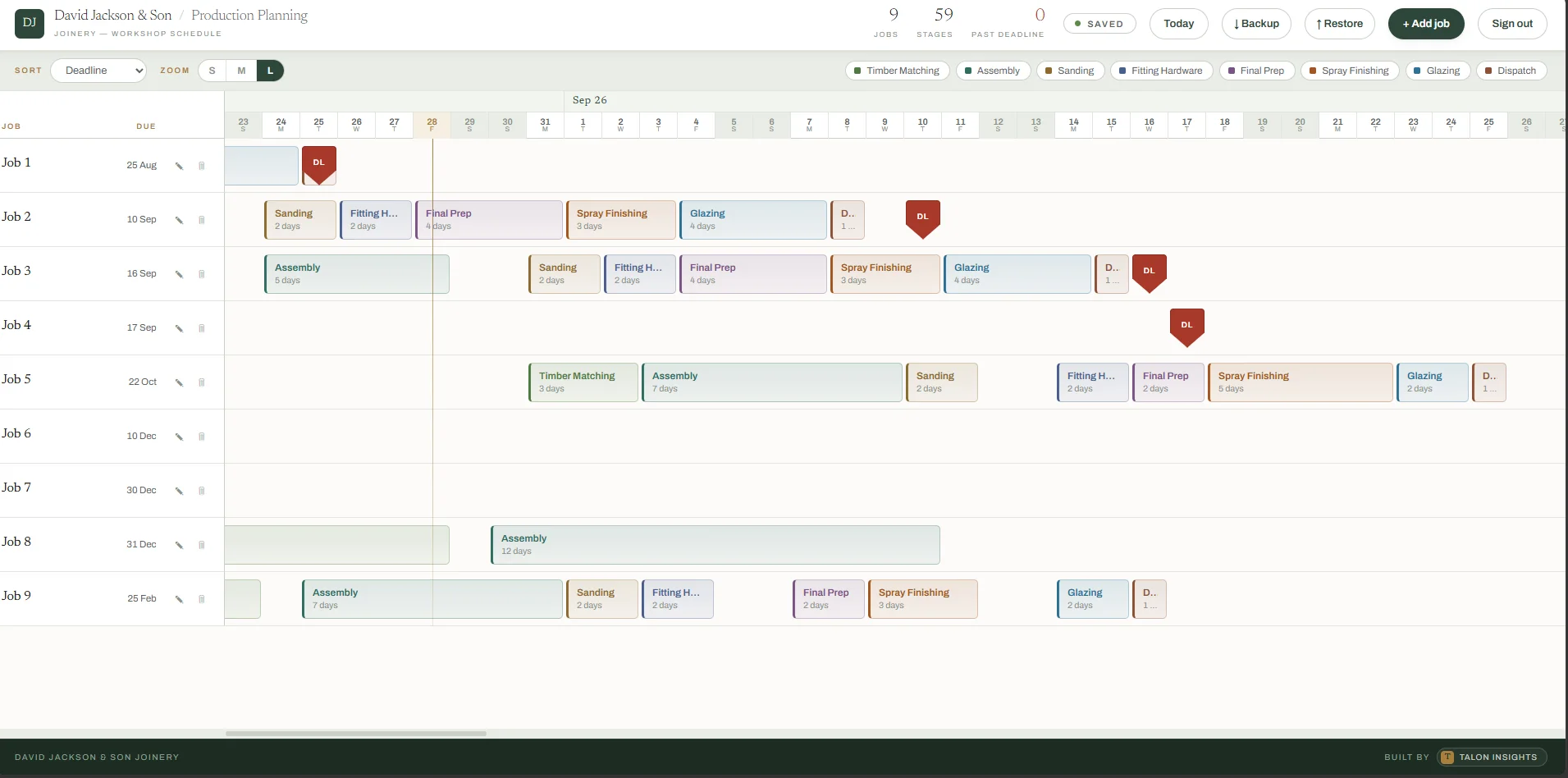
One other thing followed from being there rather than from being briefed. Production was being planned on paper and in people’s heads — which is a different problem entirely, but I was in there anyway.
What got built
- ◆A twelve-page website, designed and written from scratch
- ◆A filterable gallery of completed work
- ◆A listed-building consent checker and a plain-English guidance library
- ◆A production planning tool — eight stages, drag-and-drop scheduling, automatic deadline breach detection
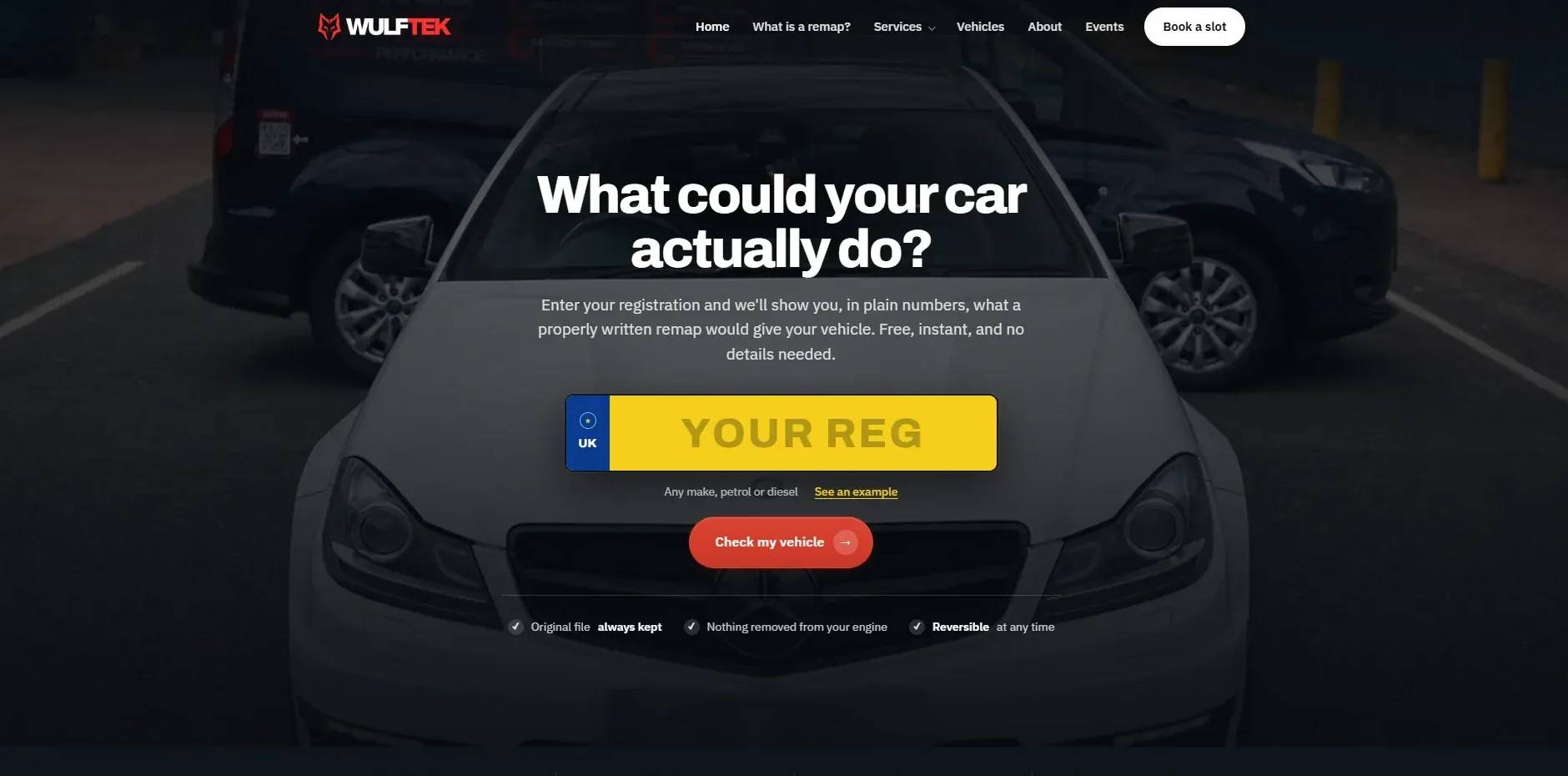
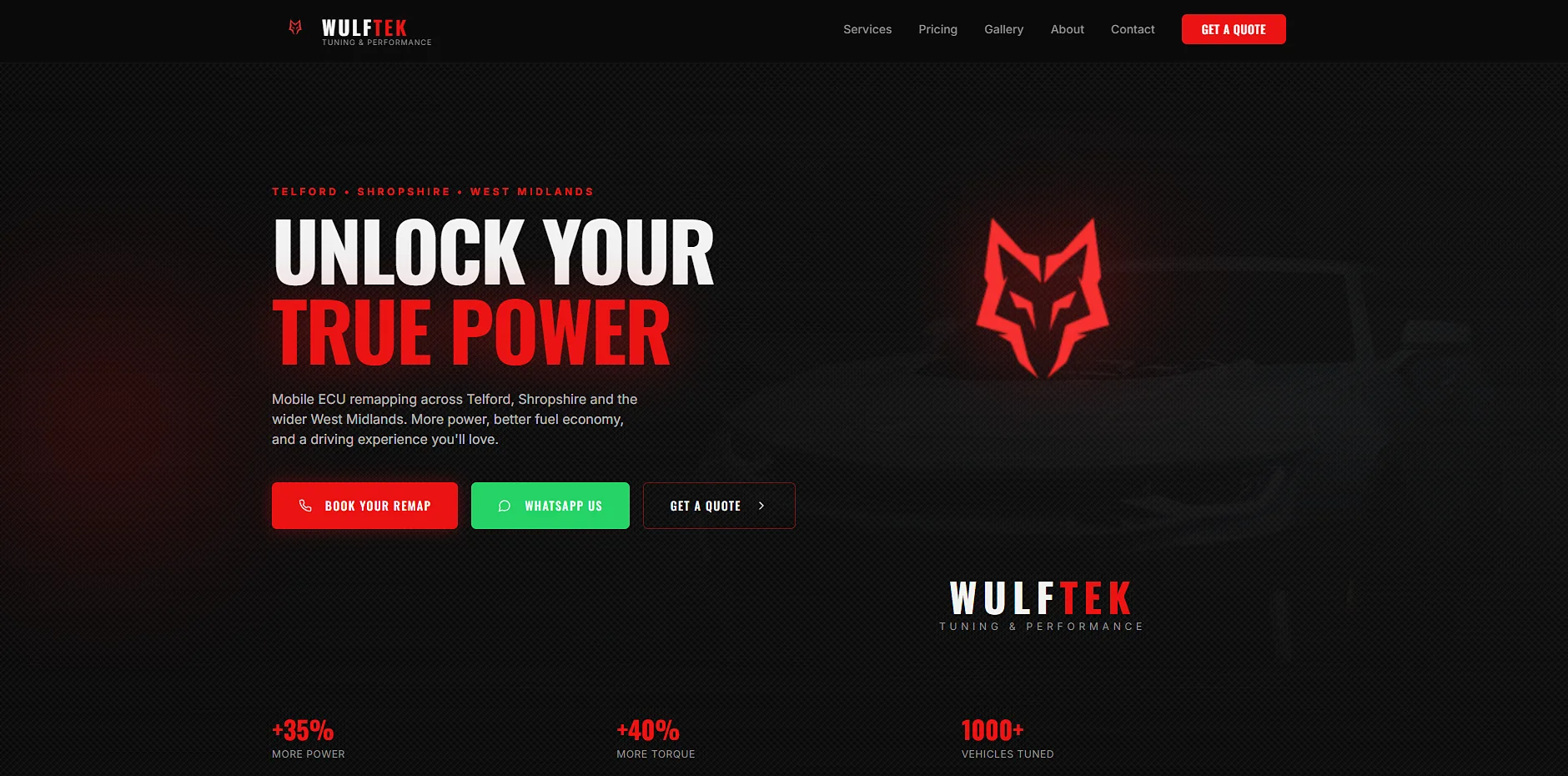
WULFTEK TUNING◆BEFORE / AFTER◆DRAG THE HANDLE
What I found
WulfTek doesn’t meet most customers through a screen — he meets them at events, next to the van. I stood at a few and listened, and the same moment kept repeating: someone stops, names their car, and wants to know — right then — what it could do. Not what remapping is. What their car could do.
The website was a template. It answered none of that.
It could have belonged to any tuning shop in the country — stock imagery, generic promises, nothing of the van, the work, or the man people were actually queueing to talk to.
What it changed
The site had to do what those conversations at the van were doing. So the hero is built around the instant answer: a registration lookup, front and centre — type the plate and the site is about your car before you’ve spoken to anyone. That’s the psychology of the moment at the events, moved online.
And the template imagery went. In its place, what a customer standing at an event actually sees: his remapping van, and a car he’d remapped himself. Proof he does the work — not pictures of someone else’s.
What got built
- ◆A multi-page website, designed and written from scratch
- ◆A dedicated agricultural remapping section
- ◆A vehicle registration lookup, so a customer can find their own car before enquiring
- ◆Service pages for ECU, economy and performance remapping
Both jobs found something the brief wouldn’t have.
A form would not have told me that David Jackson’s work belongs in listed buildings. A questionnaire would not have caught the moment at WulfTek’s events — someone naming their car and wanting to know, right then, what it could do.
Both of those came out of being in the room, more than once, after the polite part of the conversation was over. That’s not a nice extra on top of the design work. It is the design work — everything after it is execution.
It’s also why I can’t tell you what your site should be until I’ve been to see you.
Two clients. That’s the whole list.
Talon Insights is new, and I’d rather say that than pad this page with logos I’ve had tangential involvement with.
What I’d say instead is: look at what those two sites do that a template can’t, and at how specific each one is to the business behind it. That’s the part that scales. The number of them is a matter of time.
I’m currently taking a small number of projects at a founding rate — same scope, same standard, in exchange for a written case study and a review.
Your site would be the third.
Start with fifteen minutes on the phone. If it sounds like a fit, I’ll come to you — and you’ll have a written scope and a fixed price before you’ve spent anything.
REPLY WITHIN ONE WORKING DAY